MySecretGarden

U.S.A., Washington State. USDA zone 8b. Sunset climate zone 5

Roses Are Red, Violets Are Blue

Not planned post.
*
*

It's rainy, it's ugly, it's gray,
but I went to the garden and saved my day.
I clean, I trim and I pull
... under the rain.
Am I a fool?

*

*
I'm sitting now
Checking posts that I've missed
I'm caught in the Web,
but at least not in this:

*

*


Copyright 2009 TatyanaS

Welcome To The Wonderland!


Olympic National Park (Washington State's Olympic Peninsula) is just a couple of hours drive from our place. I heard that this place was called a wonderland and one of the most enchanting and diverse regions on Earth! This summer, we ventured into the park and enjoyed the Washington temperate rain forests and breathtaking coastline that I featured here earlier: DRIFTWOOD , Rain Forest Magic .
Two rain forests amazed us with their huge ancient trees, mosses, lichens and fern fields.


And who is this, peeking out from behind the tree? Moss is a great sculptor!

Precipitation in this area is 12-14 feet per year. The air is pleasantly moist, and your skin feels so fresh after being in the forest for just a couple of hours!


I chose the picture below to show the scale of trees.


Olympic National Park encompasses more than 60 miles of wild Pacific coast. Beaches with huge rocks and ghostly driftwoods were difficult to leave. I could sit there and listen for hours to the sound of the waves, pounding surf and calls of seagulls.


Do you see many people in these pictures? Very few. This was a great plus to visiting the park. Wilderness was a word which often came to my mind.

A million visitors come to Olympic National Park every year, but it seems that they are spread about. Often, we saw no one around.


One of our stops was at the rustic and historic Lake Quinault Lodge.

On October 1, 1937, President Franklin D. Roosevelt visited Lake Quinault Lodge. During his visit, the topic of establishing a park came up over lunch. Nine months later, Roosevelt signed a bill creating Olympic National Park.


What we saw during our trip was just a small part of the park.There is more to see: lowland forest, montane and subalpine forests, alpine meadows, glaciers, etc.
The area is rich with Native American history.
Come see this magnificent part of the world, and it might be your trip of a lifetime!

(I think the Washington Travel Industry should love me for this phrase!)
This post is part of a week-long bloggers’ celebration of the National Parks hosted by Pam at Digging .
*

Copyright Tatyana S http://tanyasgarden.blogspot.com/

Purple Frame Blooms of October

I know, I know, October blooms are supposed to be yellow, orange or white, dark red and purple (like those of mums). But what to do, here they are, in full bloom: some pink, red and purple flowers from my garden. It might have something to do with this summer which was so warm and sunny here in the Pacific Northwest.
*
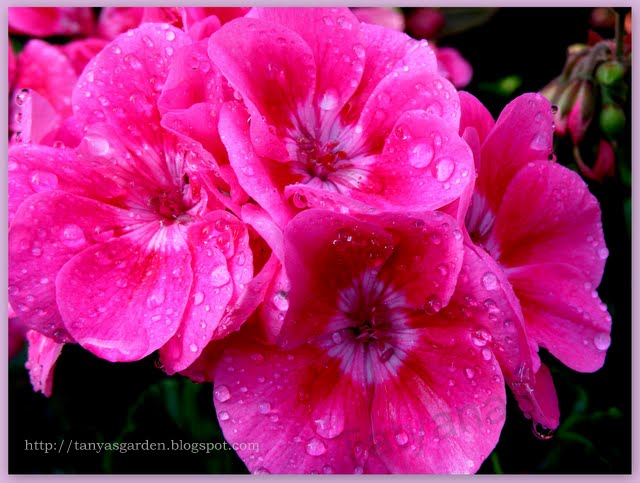
Pelargonium
*

Unknown Dahlia, gift from a friend
*
 

Rose, gift from my mother-in-law
*
 

Mister Lincoln Rose

*
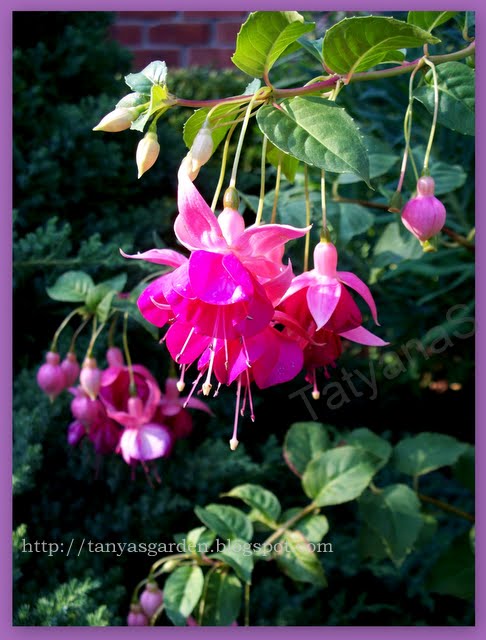
Hardy Fuchsia
*
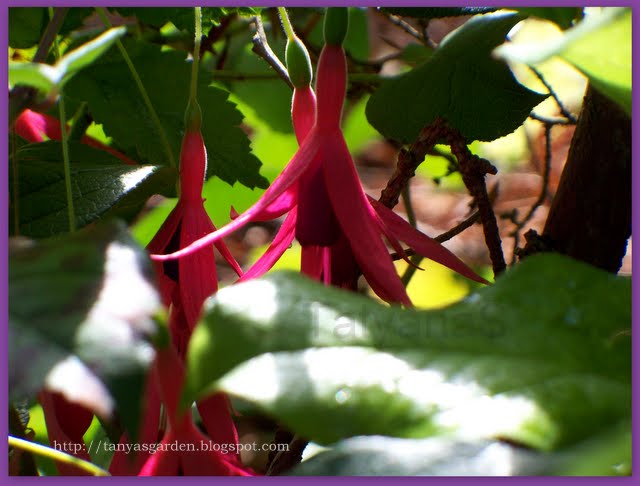
Fuchsia magellanica

*
 

Princess Lace Hydrangea

*
 

Hydrangea Endless Summer

*

Clematis Dr. Ruppel

*
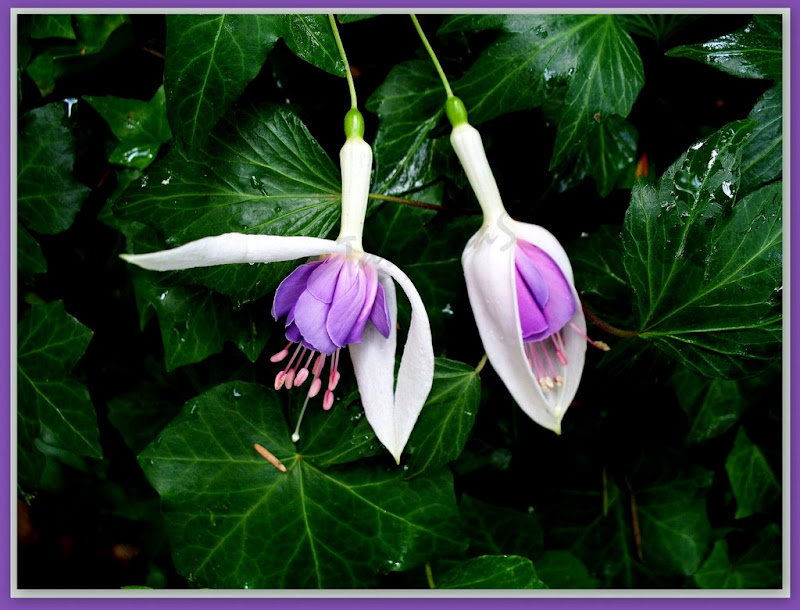
Quasar Trailing Fuchsia


*
But wait, here are some "proper colored" autumn blooms. They came in pots from stores and were planted after they finished blooming.
Garden Mums
*
Asters
*
The mums in the three little pots shown below will be moved to the open soil soon.

Garden Mums
*
Copyright 2009 TatyanaS

Before and After. April - October 2009

Copyright 2009 TatyanaS

The following is a report about the project that has been started in April 2009.
For five years, the area along the garage wall was not getting any attention. Three yellow spots on the picture below are the grasses planted there temporarily, before the right spot for them would be found. Two of them were Moor grass (Molinia "Variegata"), and one was Japanese Blood grass.

The long naked wall bothered me, and planting started.
Professional help (see the picture below) was hired at a rate of $4 per planting hole. A pick-axe was used since the native soil here is sandy with a lot of rocks ranging in size from pebbles to two- pounders.

First, two climbing hydrangeas came (H. petiolaris "Mirranda"and Schizophragma hydrangeoides "Moonlight"), followed by three clumps of Bowles' Golden grass (Milium effusum "Aureum") and several hostas. I hope the hydrangeas won't turn to monster plants described in one of the posts written by someone from blotanists.

Then, came magnolia Vine Eastern Prince (Schizandrs chinensis) - on the right corner. This is one of the vines which can tolerate shade. It is originally from northern China and the Russian Far East (the post about it is here This Plant Is A WWII Hero. (Vine For Shade) ). I like it for its beautiful foliage as well as its pests- and disease resistance.

Pink Bleeding Heart (Dicentra spectablis Pink) was happy to get more space after sitting for several years in a container.

A couple of Coleuses add color to otherwise green and white palette, especially after the Bleeding Heart finishes blooming.

Bowles' Golden grass is the fastest growing plant in a new border . With such growth, I might need to divide it by next fall.

Below is the current view. All the plants seem to be happy. Helleborus foetidus "Gold bullion" is a baby plant which has been moved from the mother plant growing in front of the house. The post about it is here Hellebores Foetidus - A Year-Round Beauty . The only plant that I might replace is the Japanese Blood grass which does best in full sun. What I have here is part shade with several hours of afternoon sun.

Generally speaking, I am pleased with the result. Different shades of green, whites of variegated grasses and hydrangea blooms, plus pink & white blooms of a bleeding heart create a calm but bright border. Transplanted tiny plants of Helleborus niger should grow to good size clumps, fill the empty space and will add to the border's texture.

What would I do different? I would move the stepping stone path further from the wall and make the bed's edge curved. But, since the stepping stones were laid before the idea of having this bed was born, the shape and size of it were predetermined. Anyway, it's better than a narrow strip of land covered with mulch.

The question that I have: Do I need to remove the supports for the climbing hydrangeas? I read that these plants are so strong they will climb the wall without any help. Actually, I got scared after I read the post which I mentioned above. The author wrote how huge and unruly her plant became. Any advice?

*

October Blushes

Copyright 2009 TatyanaS

To blush is to display redness in one's face; the term is usually used when the redness is a result of an emotional response, which could reflect embarrassment, shame, or modesty. (Wikipedia)


Is autumn embarrassed, ashamed or just modest?

It is not easy to get naked...
*

Blog Archive

Search This Blog

Related Posts Plugin for WordPress, Blogger...

I'M GLAD TO SEE YOU!

Labels

Abyssinian Banana (4) Actaea s. (1) Agapanthus (1) Agressive plants (1) Alaska (8) Amaryllis (5) Aquilegia (1) Aralia (4) Arizona (1) Arundel Castle Gardens (1) Autumn (47) Bainbridge Island Gardens (8) Before and After (8) Berry (4) Bird Houses (1) Bloedel Reserve (1) Blotanical (3) Blue Poppy (2) Book review (1) Botanical Gardens (3) Bouquets (9) Butchart Gardens (9) California (4) Calla (1) Canada (2) Chanticleer Garden (1) Clematis (4) Coleus (1) Colonial Gardens (7) Conifers (3) Containers (22) Corydalis (1) Dahlia (5) Dan Klennert (1) Desert Landscape (1) DIG (1) Dogs (14) Dry creek bed (1) Duris Cucumber Farm (1) Elandan Gardens (2) End of Month View (12) England (16) English Gardens (2) Euphorbia (1) Eze France Exotic garden (2) Fall garden (19) Far Reaches Farm (1) Favorite plants (52) Favorite plants. Tree Philodendron (1) Fences (2) Foliage (7) Formal gardens (1) Foxglove (14) France (4) Frankfurt Botanical Garden (1) Front Garden (5) Fuchsia (8) Garden decor (3) garden design (1) Garden elements (48) garden rooms (1) garden structure (1) Garden Tour (1) Garden works (15) Gardening Tips (4) Gardens of nature (11) Gardens to see (114) Gardens to see (tours) (25) Geraniums (2) Germany (5) GH Garden Tour (7) Giveaway (4) Giverny (2) Gossler Farms Nursery (1) Grasses (8) Great Dixter (3) Greenhouse (2) gunnera (4) Hampton Court (1) Hawaii Garden (1) Hellebores (8) Herbs and Vegetables (22) Heronswood (7) Hidcote (1) History of gardening (11) Holidays (25) Hops (1) Hosta (4) Hydrangea (7) Illumination (1) Italy (12) Japanese maple (14) Kew (4) Lakewold Gardens (22) Lavatera (1) Lavender (3) Leucosceptrum stellipilum ‘Ogon' (1) Little and Lewis Garden (1) Lobelia tupa (2) Meconopsis (2) Melianthus major (2) Minter Gardens (1) Missouri Botanical Garden (1) Mount Vernon (1) My Garden (150) My Open Garden (4) MY PICTURE OF THE DAY (80) Neighborhood (9) NPA Open Gardens (13) NWFGS (29) Old Goat Farm (3) Orchids (1) Oregon (4) PalmenGarten (2) Pampas grass (1) Peony (6) Perennials (59) Plant ID (9) Poppy (5) Problem areas (3) Recipes (2) Rhododendron (5) Rock garden (2) Romneya c. (2) Sarah P. Duke Gardens (2) Serre de la Madone (Lawrence Johnston) (1) Shade Garden (20) Shayne Chandler Garden (1) Shrubs (11) Sissinghurst (9) Sky Watch (1) Slope garden (6) Slugs (3) Spring/Summer garden (141) Stachys (1) Succulents (9) Summer/Fall garden (74) Texas Arboretum (1) The Garden of Great Depression (1) Tree Peony (2) Trees (36) Trips (81) Tulip Festival (16) Uncategorized (7) Vegetable garden (4) Vegetables (1) Villa Cimbrone (2) WA (114) Weigela (1) Wells Medina Nursery (1) White garden (3) Wild animals (21) Wild flowers (16) Windcliff (1) Wineries (1) Winter and winter garden (54) Wordless Wednesday (31) Yang's Garden and Nursery (6)
Copyright 2009-2026 TatyanaS, MySecretGarden Blog


*