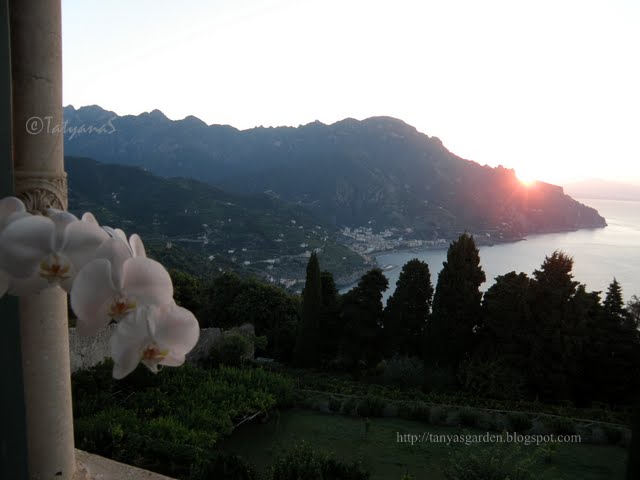
To continue my previous post - Yes, I did watch several sunrises through the old windows of the famous Villa Cimbrone.
*
 *
*
"Villa Cimbrone, which consists of the main building and around six hectares of historic parkland, is considered one of the most important examples of the landscape, botany and culture of England created in the Mediterranean area between end of the 19th and the beginning of the 20th centuries. The gardens were laid out following the aesthetic concepts of English architects and landscape gardeners such as Harold Peto, Edwin Lutyens and Gertrude Jekyll. The choices of arborial essences and the design of the flowerbeds and cultivations felt the expert hand of Vita Sackville West". - From the materials provided to the Villa gardens' visitors.
*
*
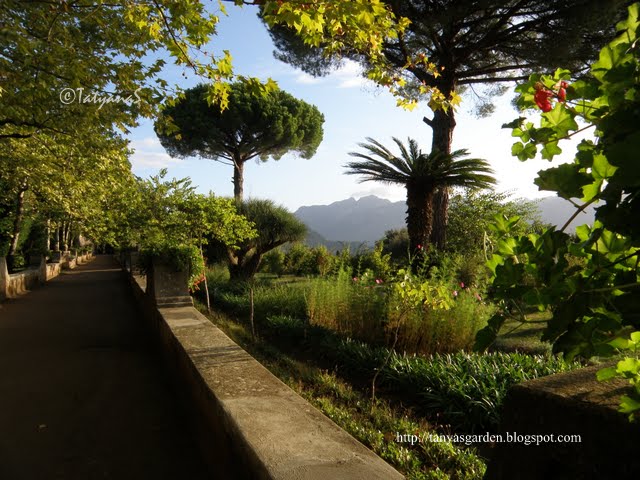
When the time came to leave this place, and we went for a final walk along the long, seemingly endless alley, I was sad.
*
*
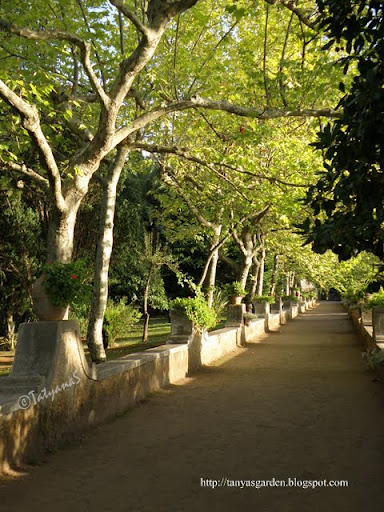
I knew I will miss this feeling of happiness and expectation of magic that the walk brings. The Avenue of Immensity is its name. Long and shady, covered by wisteria with flower clusters which can reach six feet in full bloom. To enjoy it totally, you need to find several minutes when nobody else is there. I know you have trust in me. If I managed to get into a swimming pool on the bottom of the cliff in Amalfi all by myself when everybody else was sleeping, then I certainly could find time to be alone in one of the most beautiful places in the world. You can tell looking at some pictures that they were taken early in the morning.
*
*
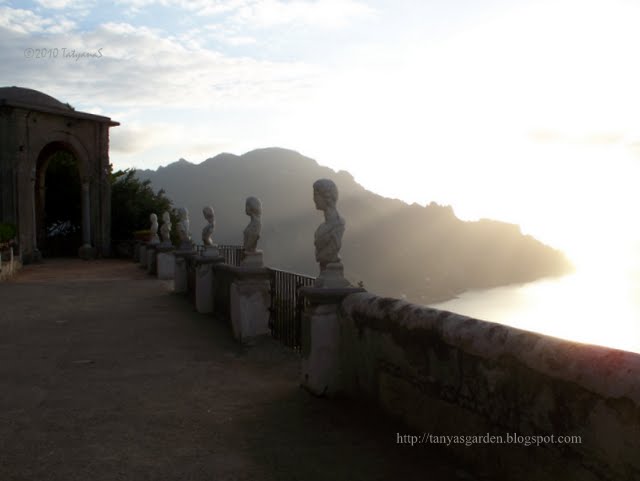
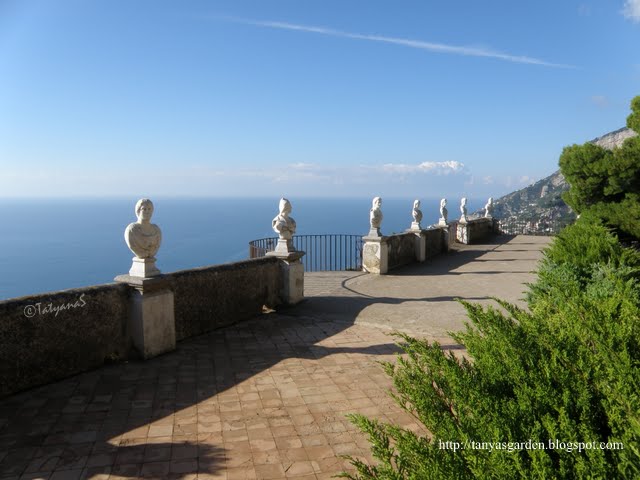
At the end of the Avenue of Immensity is the Terrazzo Dell'Infinito, the Terrace of Infinity.
*
*
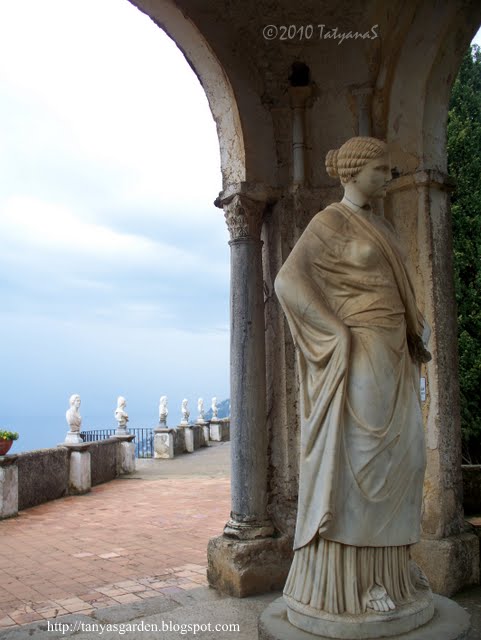
The statue of Ceres, goddess of the Harvests, marks the end of the Avenue of Immensity and the entrance to the famous Terrace. The Terrace is also called "The Doorway of the Sun".
*
*
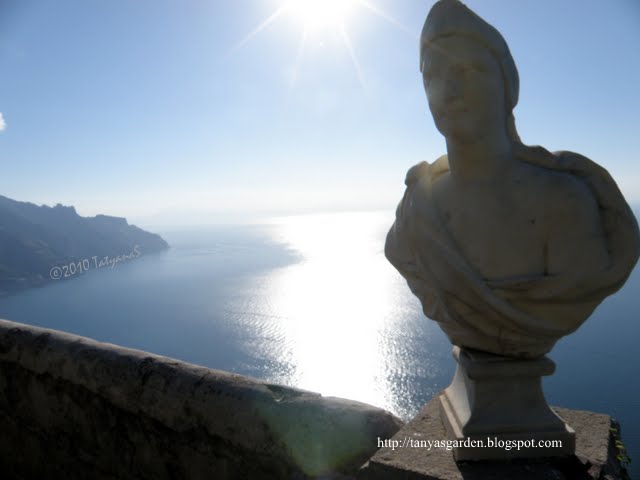
XVIII century marble busts attracted my attention first.
*
*
Then I saw the view, and it took my breath away. The American author Gore Vidal described it as "The most beautiful panorama in the world". That view mesmerized me and made me want to be a bird. Honestly. Later, I read that Ferdinand Gregovorius (German historian, 1821–1891) described this place as "Where the desire to fly is born". He was right!
*
*
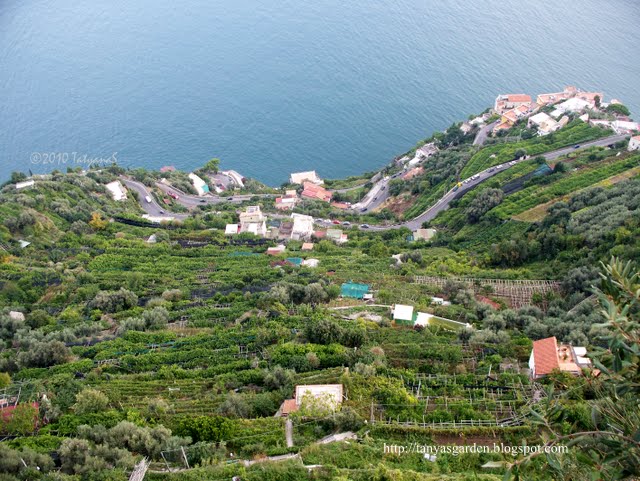
Sparkling sea, lemon and olive groves, houses with red roofs clinging to the hills and most of all, the space itself, open and enormous, bring an incredible feeling of excitement. There is a little balcony there that made me think of the Great Canyon Skywalk with a glass deck, although I never stood on it.
Going to the gardens, I didn't take a map and almost got lost following numerous paths in the gardens. What a beautiful place to get lost! There is a surprise at each corner!
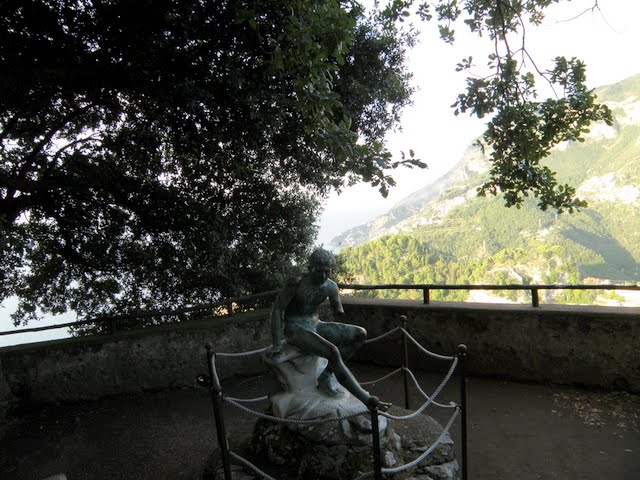
XVIII century bronze copy of 'Hermes at rest' (the original is in the national museum in Naples):
*
*
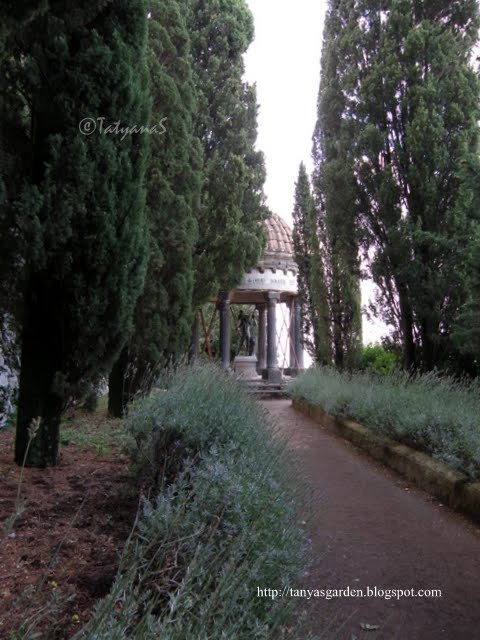
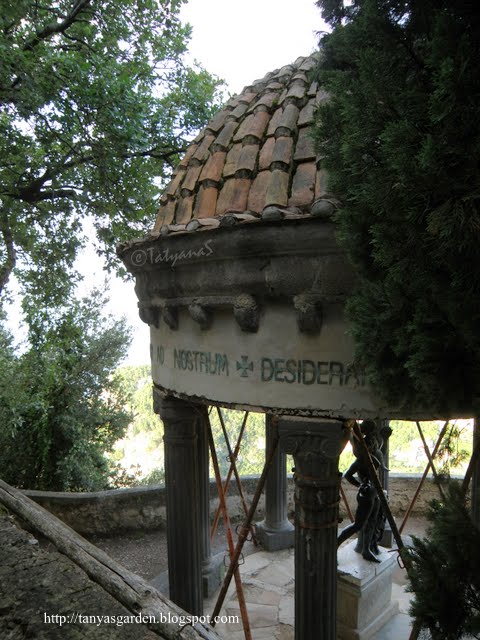
The alley between cupressus sempervirens (the Mediterranean Cypress also known as Italian, Tuscan, or Graveyard Cypress, or Pencil Pine) and lavender bushes led me to the Temple of Bacchus.
*
*
*
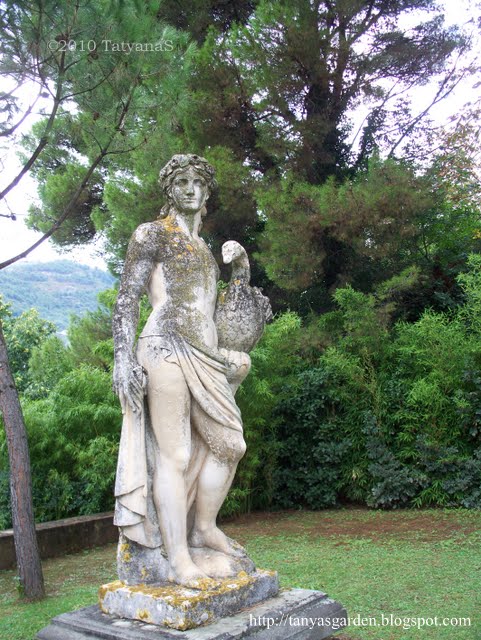
Leda with Swan, one of the four ornamental statues, stands on the outer edges of the rose terrace with geometric flowerbeds.
*
*
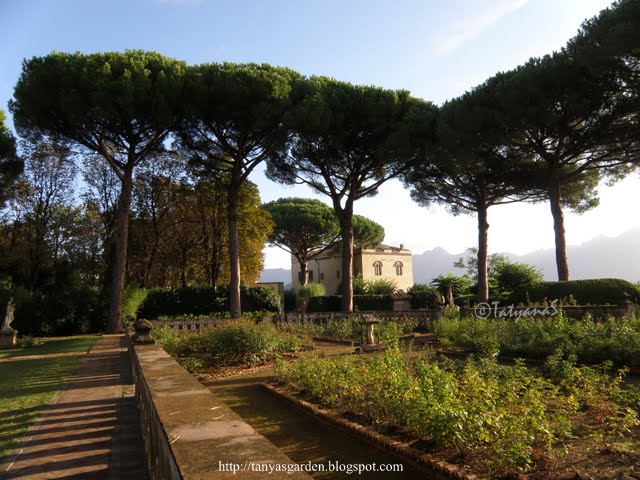
Ancient varieties of scented French and English roses are planted here:
*
*
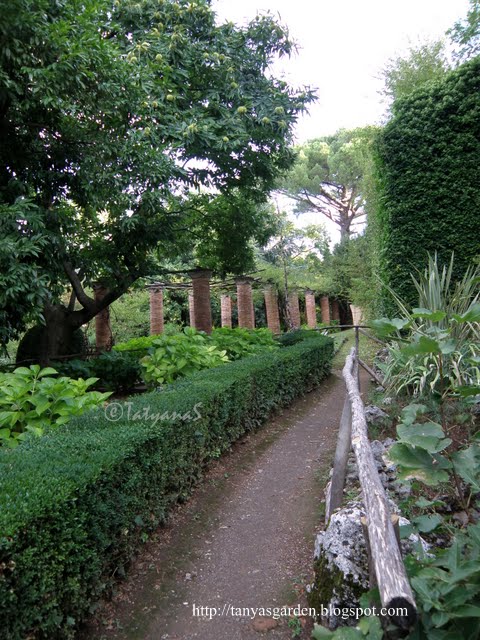
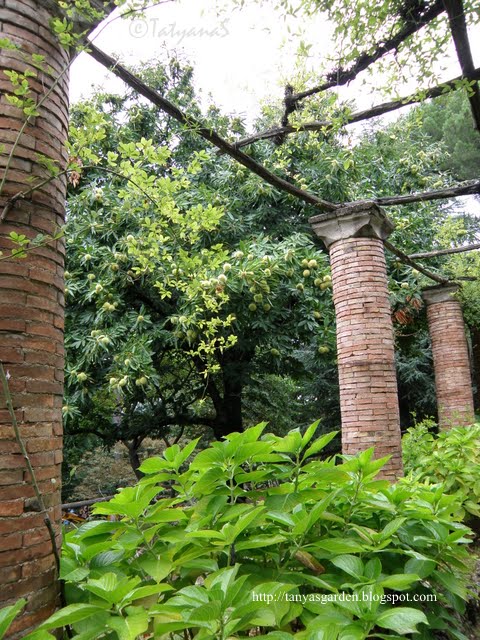
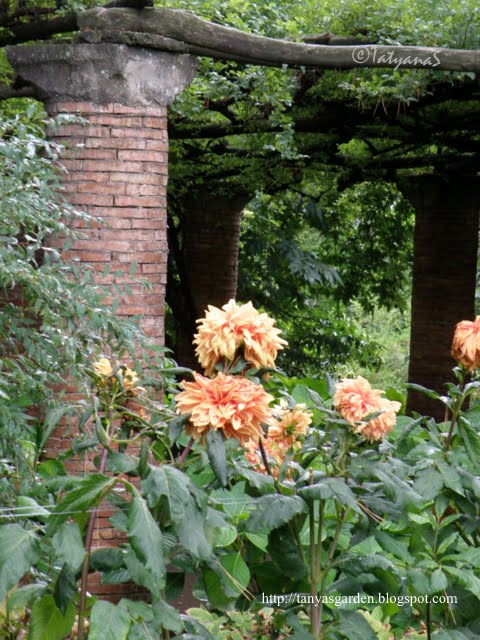
I loved the Hortensia (Hydrangea) Avenue. At one point it gets beneath a pergola supported by substantial round terracotta columns.
*
*
*
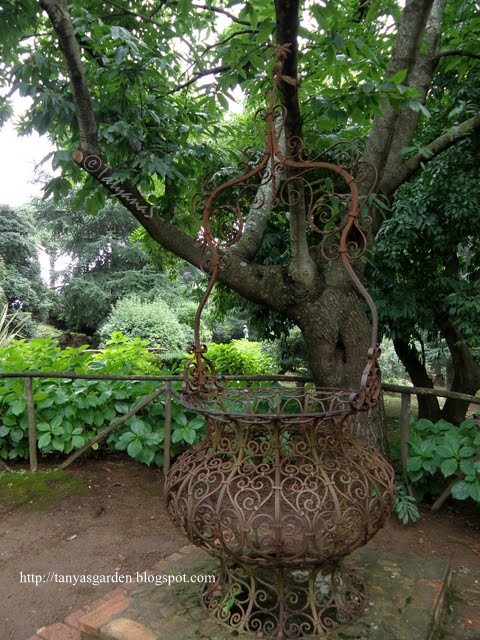
Old cast iron well stands at the end of the Hortensia Avenue:
*
*
Did you notice something in the pictures? There are no bright flowers! It was the end of September, and the gardens finished their cheerful summer displays. Believe it or not, I didn't miss them.
*
*
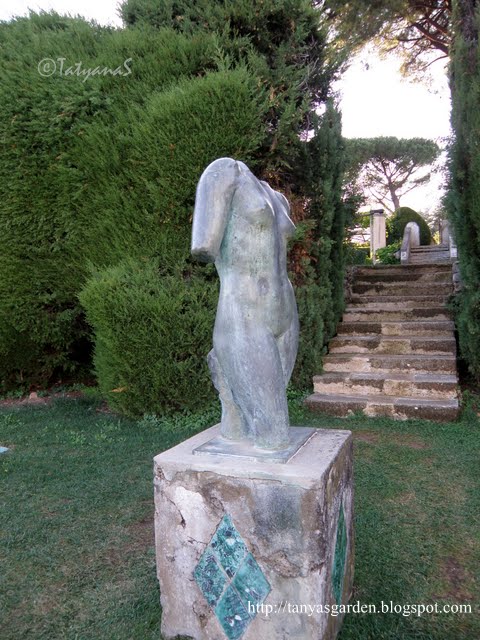
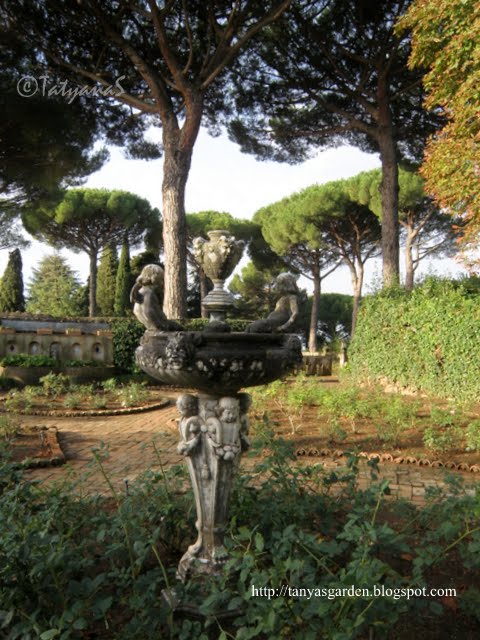
Countless decorative elements such as statuary, fountains, stone nymphs, pavillions, arbors, pergolas and small temples held my attention together with trees, hedges, and what was left from the annuals.
*
*
If you want to see flowerbeds in their prime, know that September is too late. As for me, I absolutely enjoyed what I saw.
*
*
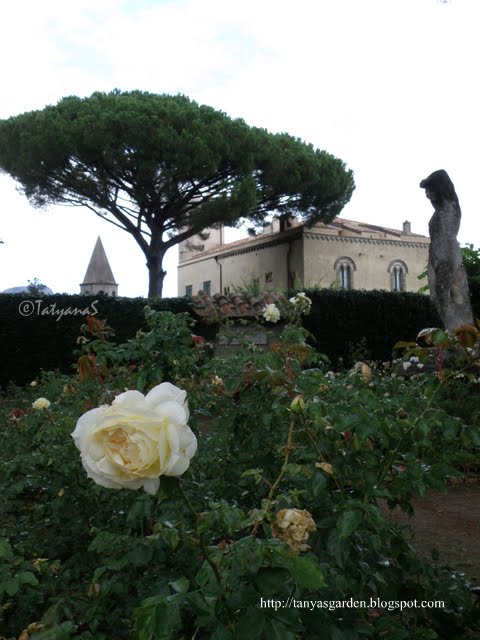
Moreover, the last single blooms looked so poignant! That made me appreciate them more than thousands of prime time blooms could do.
*
*
Look at this row of wilting dahlias. Aren't they beautiful?
*
*
Graceful aging - this expression came to my mind when I saw them. In some gardens, they probably would remove the plants already. Not in Italy with its respect for everything that is old.
*
*
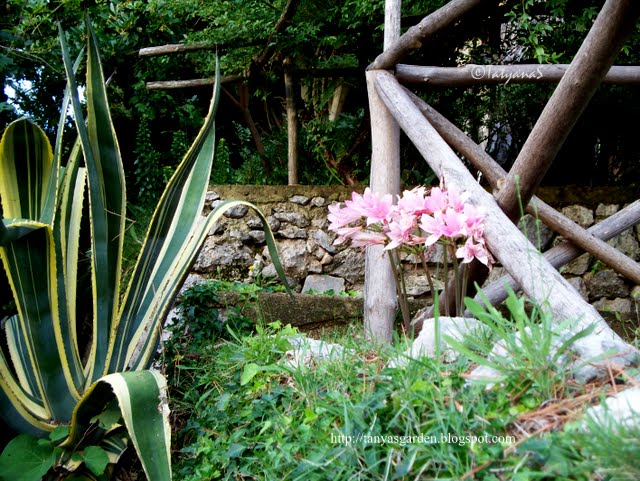
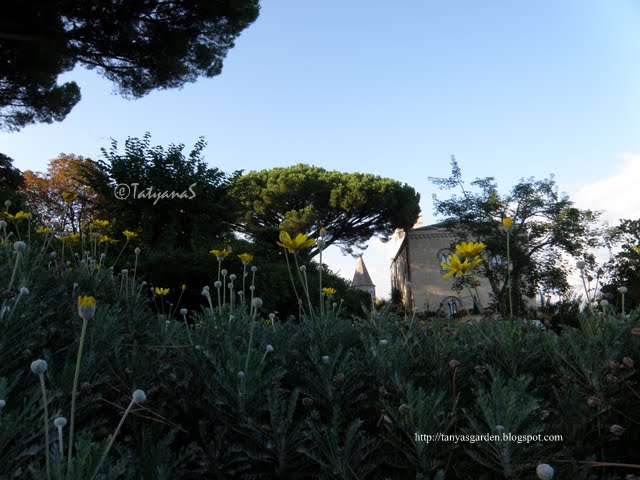
Long ago, I read a legend about a gardener who grew hundreds of beautiful flowers, I think lilies. The word about their beauty spread and reached the emperor. The gardener was told that the emperor was going to visit his garden. When he arrived, he was shocked with what he saw. Instead of the masses of gorgeous blooms, he saw fresh-dug soil with a single lily standing . The emperor was furious and angry. What happened? The old gardener explained that he wanted to show the emperor the true beauty of the plant, and that is not possible with hundreds of them. Only a single bloom can give the appreciation of its gorgeousness. I thought about that legend looking at the last blooms of hydrangeas, roses, cosmos, daisies and lilies.
*
*
*
Although the end of September left the biggest part of the gardens without blooms, there was part of the gardens which were bursting with vibrant colors. I'll show you the pictures in my next post. This is one example:
*
*
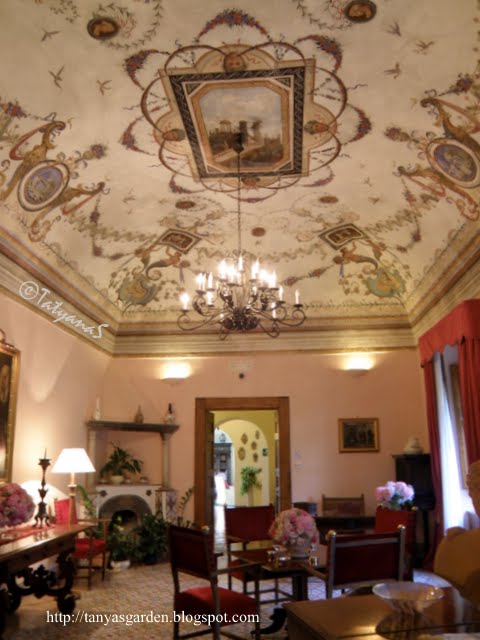
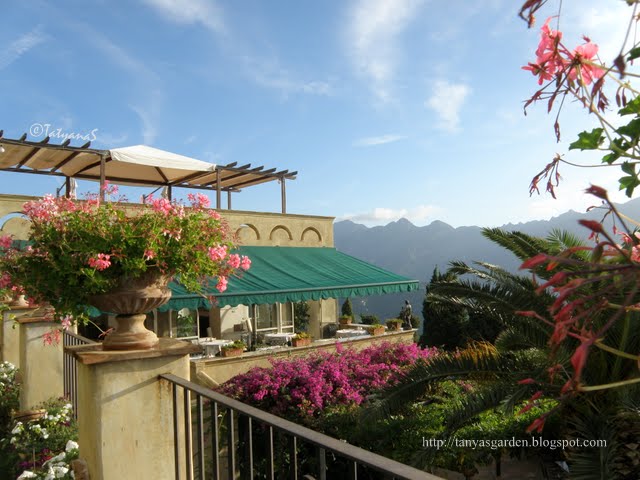
Oops, it is the wrong one. It is the inside of the Villa. Pretty, isn't it? This is the outside:
*
*
See you in a couple of days with more colorful pictures of this unique place!
My previous Italian post is here:
***
Thank you for your kind, warm comments! I am home already!
Copyright 2010 TatyanaS


