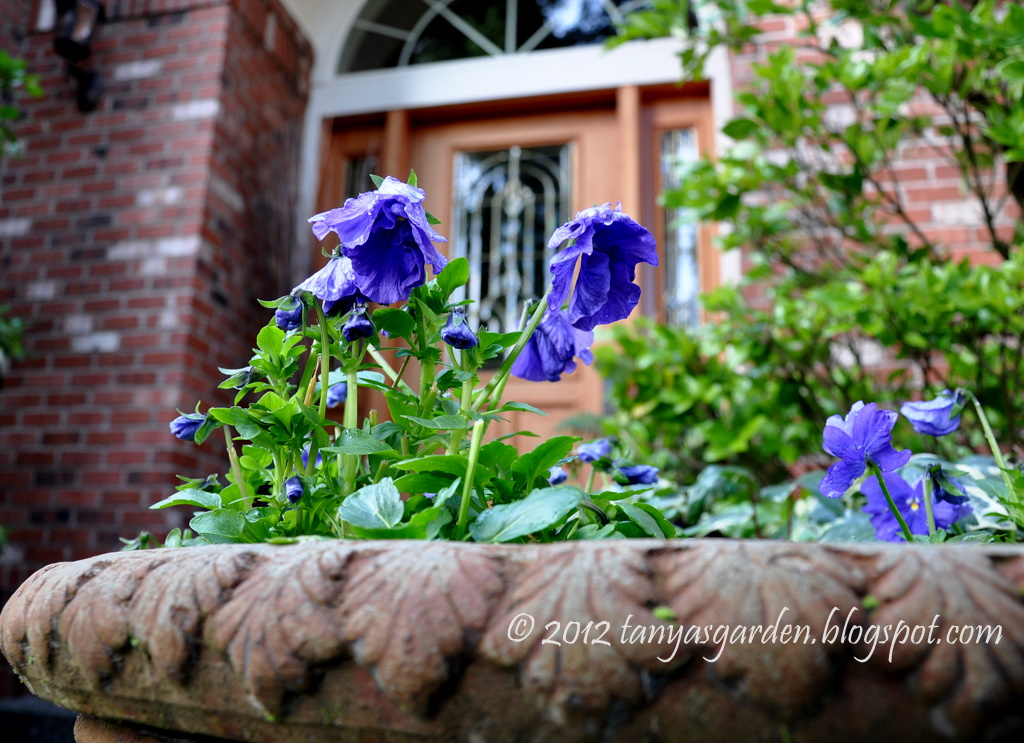
Although it's still cool and wet here in the Pacific Northwest, it's time to get into the garden!
Daffodils, helleborus, brunnera and primulas are blooming. Soon, I'll cut down the fern's bracts to encourage new leaves' growth. Slug bait was applied since I saw damage caused to primulas by them.

My hydrangeas decided to multiply themselves. Several lower branches that touched the ground gave roots. I'll let then grow a bit, and then I will move the baby plants to a new place. The most difficult task in this breeding for me is to actually find available space.


It looks like a Helleborus is now a must in every garden. It's so interesting. Do you remember, several years ago, many of us hadn't even heard about it?

At last, I cut down the tall dry Joe Pie Weed stalks. They decorated my winter garden pretty well! I plan to put them on the very bottom of a new bed.

Berberis can be seen from afar thanks to its beautiful color:

I can't imagine my garden without Euphorbia. Beautiful, tough and what's important for me - easy!

A new addition to my garden: peony Coral Charm. I fell in love with it after seeing it in Frankfurt's Palmen Garden:

This is the biggest surprise in my garden, an artichoke. In February, I saw this:

I grow artichoke only for decoration. The plant looked good in late fall. But, I never thought it'd love the cold temperature so much!


Columbine is among the first perennials to show up in spring. I love its leaves!

Another berberis. I need to protect this one with a tomato cage because last spring all the new growth was eaten by a rabbit.

This garlic grows among perennials to deter pests. Fresh green leaves are good in salads and soups. Healthy!

Isn't it beautiful?

Another tough plant is daylily. I dug out a huge clump in fall, divided it and planted some parts in new places. These parts were left, since I didn't find space for them. I thought they'd die during the winter, and I'd send them to a compost pile. Not so! With their roots exposed, they are alive and well!

Poppy and allium. Spread, spread, spread!

Oh, how I'm glad to see this! It's my new Eremurus. Last summer, after showing some nice foliage but no blooms, it died down. I thought it was gone for good. Well, look at it! I hope it'll bloom this summer!

Black currant is a connection to my Russian heritage where it's a staple in every garden.

Its leaves can make your tea aromatic and enrich it with vitamin C.

It's time to divide daisies, although I should admit that a big mass of white daisies looks stunning in the middle of summer.

Roses are well... as long as a deer is far away!

Allium! Oh, I love seeing them multiplying!

I just finished cleaning this bed of hydrangeas and Japanese aralia. The Japanese aralia was moved here from another place where it suffered after the snow fell from the roof. , Honestly, it looked ugly and almost dead. Look at it now - a wonderful healthy plant!

This saxifrage didn't waste any time. It increased, probably, four times in size.

Its fresh growth looks wonderful!

These two 'help' me to trim bushes:

We had snow and hail here yesterday. I hope this is the last of the bad weather.